
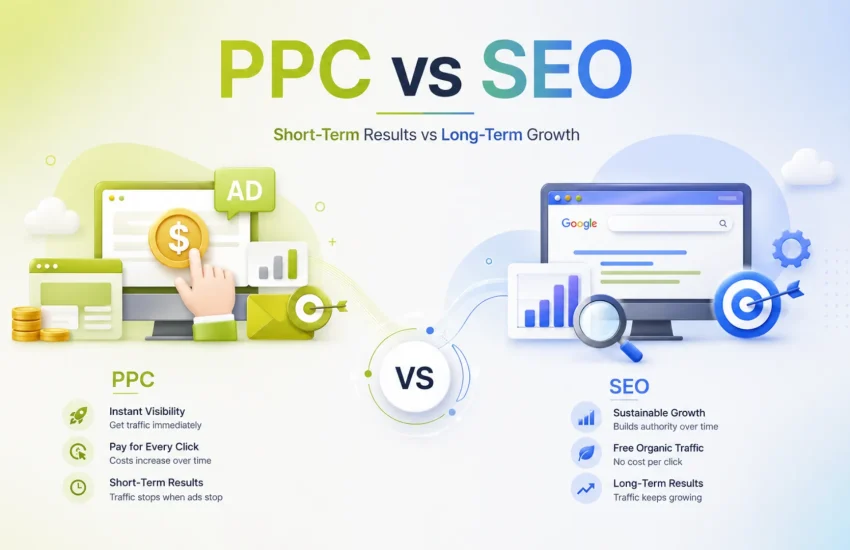
SEO provides the foundation for long-term compounding growth and local credibility, while PPC offers a high-precision instrument for immediate lead acquisition. Across Virginia’s competitive landscape, from Arlington’s tech hubs to Richmond’s commercial core, the challenge lies in the intelligent distribution of marketing capital. As an entrepreneur, you face a vital choice between cultivating permanent digital assets or securing instant reach. Virginia SEO Company provides this exhaustive analysis, specifically calibrated for the unique economic dynamics of the 2026 market.
The fundamental DNA: Understanding the Mechanics
What is SEO in 2026? (The Organic Powerhouse)
SEO is the art and science of aligning your business’s digital presence with Google’s increasingly sophisticated AI algorithms. In 2026, SEO is no longer about “keyword stuffing.” It is about E-E-A-T (Experience, Expertise, Authoritativeness, and Trustworthiness).
For a Virginia-based business, SEO means:
- Local Intent Dominance: Appearing in the “Map Pack” when someone searches for services “near me.”
- Semantic Content: Answering the complex questions your customers are asking via Voice Search or AI Overviews.
- Technical Excellence: Technical SEO guarantees your site loads in under 1.2 seconds for users on mobile networks in rural Virginia.
What is PPC in 2026? (The Precision Strike)
PPC is an auction-based advertising model where you pay for visibility. While SEO is “earned” media, PPC is “bought” media. In the Virginia market, where industries like Defense Contracting, Law, and Real Estate have massive profit margins, PPC auctions are legendary for their intensity.
Pros and Cons of SEO in Virginia
While SEO is the “Holy Grail” of digital marketing, it isn’t without its challenges. For a business in Richmond or Fairfax, understanding these nuances is critical.
The Pros of SEO
- Sustainable ROI and Zero Click Cost: The most significant advantage for Virginia businesses is that once you rank for a high-value term like “Virginia Beach Roofers,” you do not pay Google a cent for the 500th click. Your cost per lead eventually drops to near zero.
- Domain Authority and Brand Trust: Users in Northern Virginia (NoVa) are tech-savvy. They know the difference between an ad and an organic result. Ranking organically signals that you are an established leader in the Virginia community, not just a company with a big ad budget.
- 24/7 Lead Generation: Your physical office in Roanoke might close at 5:00 PM, but your organic rankings never sleep. SEO ensures your “digital storefront” is always on the first page, capturing late-night researchers.
- Compounding Content Assets: Every blog post you write about Virginia state regulations or local home maintenance becomes a permanent asset. Unlike an ad that disappears, a well-optimized page can generate leads for years.
The Cons of SEO
- The “Valley of Death” (Time Lag): You won’t see results tomorrow. In competitive Virginia markets, it takes 3 to 9 months to see a significant movement. This can be difficult for startups needing immediate cash flow.
- Algorithm Volatility: Google frequently updates its AI. A strategy that worked in 2025 might need tweaking in 2026. This requires a dedicated partner like Virginia SEO Company to monitor your “digital health.”
- High Initial Labor Cost: SEO requires high-quality writing, technical coding, and backlink outreach. It is “front-heavy” in terms of effort.
Pros and Cons of PPC in Virginia
PPC is the “High-Octane Fuel” of marketing. It is powerful, but it can burn through your budget if not handled with precision.
The Pros of PPC
- Granular Geographic Targeting: If you only want to serve customers within a 10-mile radius of the Pentagon or a specific zip code in Charlottesville, PPC allows for that surgical precision.
- Instant Visibility for New Offers: Launching a “Winter HVAC Inspection” special in Alexandria? You can be at the top of Google within an hour.
- Data-Rich Insights: PPC tells you exactly which keywords resulted in a phone call. You can use this “Gold Mine” of data to decide what SEO content to write next.
- Protection Against Competitors: Even if you rank #1 organically, a competitor can buy an ad above you. PPC allows you to “Defend your Turf” by bidding on your own brand name.
The Cons of PPC
- The “Money Pit” Risk: In high-stakes Virginia industries (Legal, Medical, Finance), the Cost Per Click (CPC) can be astronomical. If your landing page isn’t perfect, you can spend $1,000 in a day without a single lead.
- Zero Residual Value: The moment you stop paying Google, your traffic drops to zero. You are effectively “renting” your leads rather than “owning” them.
- Ad Blindness: A significant portion of Virginia’s younger, tech-literate population uses ad-blockers or instinctively scrolls past “Sponsored” posts to find organic results.
- Maintenance Intensity: PPC is not “set it and forget it.” Between bid adjustments, negative keyword lists, and A/B testing ad copy, it requires daily management to remain profitable.
Direct Comparison: Which Wins in 2026?
| Situation | Winner | Why? |
| New Business Launch | PPC | You need “Instant Oxygen” (leads) to survive the first year. |
| Establishing Local Authority | SEO | Organic rankings build a reputation that money can’t buy. |
| Emergency Services | PPC | People in a crisis (burst pipe, locked out) click the first thing they see. |
| High-Ticket/Long Research | SEO | High-value clients (Commercial Real Estate, Law) do deep research. |
The Virginia ROI Matrix
To understand which works better, we must compare them across the metrics that actually impact your bank account.
| Metric | SEO (Organic) | PPC (Paid Ads) |
| Speed to Market | 3–12 Months | < 24 Hours |
| Cost Structure | Monthly Retainer / Long-term investment | Daily Ad Spend + Management Fee |
| Durability | High (Results last after spending stops) | Zero (Traffic stops when the budget ends) |
| Click-Through Rate (CTR) | ~70% of users prefer organic | ~10-15% for high-intent keywords |
| Trust Factor | High (Verified by Google’s algorithm) | Moderate (Labeled as “Sponsored”) |
The “Virginia Cost” Deep Dive: Industry Benchmarks
You cannot talk about SEO vs. PPC without talking about the “Cost Per Click” (CPC) in Virginia’s most popular sectors.
The Legal Sector (NoVa & Richmond)
Northern Virginia (NoVa) houses some of the most expensive legal keywords in the country.
- PPC Reality: A “DUI Lawyer Arlington” click can cost upwards of $120 per single click.
- SEO Advantage: By building an authoritative blog on Virginia traffic laws, you can capture that same lead for “free” once you rank, saving thousands in monthly ad spend.
Home Services (HVAC, Roofing, Plumbing)
In areas like Norfolk and Chesapeake, seasonal demand for HVAC and Roofing is massive.
- PPC Use Case: When a heatwave hits Virginia, you need PPC. An emergency repair lead is worth the $40 CPC because the conversion rate is near 50%.
- SEO Use Case: Ranking for “Best Roofing Materials for Virginia Humidity” builds a pipeline of leads for full roof replacements (high ticket) that aren’t emergency-driven.
Why SEO is the “Legacy Strategy” for Virginia Brands
Compounding Returns
Unlike PPC, where the cost of a lead stays relatively flat (or increases with competition), SEO becomes cheaper over time.
- Year 1: You spend $2,000/month to get 50 leads ($40/lead).
- Year 2: You spend $2,000/month but now get 200 leads ($10/lead).
This is the Compounding ROI that builds real wealth for Virginia business owners.
Building a “Moat” Against Competitors
Once you dominate the first page of Google for “Virginia SEO services” or “Fairfax Real Estate,” it is incredibly difficult for a new competitor to dislodge you. PPC offers no such protection; anyone with a bigger checkbook can outbid you tomorrow.
When PPC is Not Just Better, But Necessary
There are three scenarios where we tell our Virginia clients to prioritize PPC over SEO:
- The Launch Phase: If you just opened your doors in Roanoke, you can’t wait 6 months for SEO. You need the “Instant Oxygen” of Google Ads.
- A/B Testing: PPC is the fastest way to see if a new service page actually converts. Spend $500 on ads to see if people like your new offer before spending $5,000 on SEO for it.
- The “Dominance” Strategy: For top-tier Virginia companies, appearing in the #1 Ad spot AND the #1 Organic spot creates a “Monopoly Effect,” capturing nearly 80% of all clicks.
The 2026 Factor: AI Search & SGE in Virginia
Google’s Search Generative Experience (SGE) is changing the game.
- SEO in 2026 requires “Information Gain.” You must provide unique insights about Virginia’s local laws or climate that AI cannot hallucinate.
- PPC in 2026 is moving toward “AI-Powered Bidding.” You no longer just bid on keywords; you bid on the likelihood of a conversion based on Google’s deep data.
Who Should Invest in SEO vs. Who Should Prioritize PPC?
In the Virginia market, a “one-size-fits-all” approach is a recipe for a wasted budget. Your choice depends on your business model, your cash flow, and your urgency. Based on our data at Virginia SEO Company, here is the breakdown of who wins with which strategy.
When SEO is the Absolute Best Choice
SEO is a marathon. It is for the visionary Virginia business owner who wants to own their market rather than rent it.
SEO is best for:
- Trust-Based Industries: If you are a Family Law Attorney in Richmond or a Financial Planner in Alexandria, clients need to trust you. Ranking organically signals that you are a pillar of the community, not just someone who bought an ad.
- High-Ticket Service Providers: If a single contract is worth $10,000+, you can afford to wait 6 months for a lead. Commercial Roofers or B2B IT firms benefit from the deep research users do in the organic results.
- Local Service Giants: If you want to dominate the “Map Pack” across all of Hampton Roads, SEO is the only way to build that long-term geographic authority.
- Content-Rich Businesses: If your business can answer complex questions (e.g., “How to winterize a home in the Blue Ridge Mountains”), SEO will capture users at the start of their buying journey.
When PPC is the Smarter Starting Point
PPC is “Instant Oxygen.” It is for the business that needs to generate revenue today to fund the growth of tomorrow.
PPC is best for:
- Emergency & Urgent Services: If a pipe bursts in Fairfax or a car breaks down in Roanoke, the customer isn’t reading a 2,000-word blog post. They are clicking the first “Sponsored” phone number they see. Plumbers, Towing Companies, and Locksmiths live and die by PPC.
- New Startups & Grand Openings: If you just launched a boutique in Charlottesville, you have zero organic presence. PPC puts you in front of customers on Day 1.
- Highly Seasonal Businesses: Landscapers in the spring or Snow Removal services in the winter should ramp up PPC spend during their peak months to capture the temporary surge in demand.
- Product Testing & E-commerce: If you have a new product and aren’t sure if Virginians will buy it, spend $500 on Google Ads to test the conversion rate before investing thousands in a long-term SEO strategy.
Summary Comparison for Decision Makers
| Business Type | Recommended Priority | Strategy |
| Personal Injury Lawyer | Hybrid | High-budget PPC for leads; SEO for long-term authority. |
| Emergency Plumber | PPC First | Focus on Google Local Service Ads (LSAs). |
| B2B Defense Contractor | SEO First | Focus on thought leadership and LinkedIn-driven SEO. |
| Real Estate Agent | SEO First | Focus on hyper-local neighborhood guides and Video SEO. |
| New E-commerce Brand | PPC First | Use Google Shopping Ads for immediate sales. |
Strategic Verdict: The “Hybrid” Approach
For the absolute best results at Virginia SEO Company, we recommend the 80/20 Virginia Split:
- Months 1-3: Allocate 80% of the budget to PPC for immediate cash flow; 20% to SEO foundation.
- Months 4-8: Shift to 50/50 as organic rankings begin to climb.
- Month 9+: Allocate 80% to SEO to maintain dominance at low cost; 20% to PPC for high-competition keywords and remarketing.
Frequently Asked Questions
Q1: Is SEO still relevant for Virginia businesses in the age of AI and SGE?
Absolutely. In 2026, SEO has evolved into “Answer Engine Optimization.” While Google’s Search Generative Experience (SGE) provides AI-generated summaries, it still cites its sources. By being the authoritative voice for Virginia-specific topics, such as “Virginia property tax impacts on real estate”, you ensure your site is the one the AI quotes. Organic search still accounts for over 50% of all web traffic in the VA market.
Q2: How much should a small business in Richmond spend on PPC monthly?
For a Richmond-based business, a starting budget of $1,500 to $2,500 per month (excluding management fees) is generally the “sweet spot.” This allows for enough data collection to see which keywords convert without burning through cash. In highly competitive areas like Northern Virginia, this floor may rise to $3,500.
Q3: Why is my CPC (Cost Per Click) so high in Northern Virginia compared to Roanoke?
CPC is driven by competition. NoVa is home to some of the wealthiest counties in the U.S. (Loudoun, Fairfax). When businesses in these areas compete for a lead worth thousands of dollars, they bid higher. A “Personal Injury Lawyer” click in Arlington is more expensive than in Roanoke because the market density and average settlement values are higher.
Q4: Can I do SEO myself, or do I need a Virginia SEO agency?
While basic SEO (like writing a blog) can be done in-house, professional SEO involves technical auditing, schema markup, and aggressive backlink building. For Virginia businesses aiming to outrank national competitors or established local leaders, an agency like Virginia SEO Company provides the tools and “insider” local knowledge that a DIY approach lacks.
Q5: How long does it take to see the first lead from SEO?
Usually 90 to 180 days. SEO is a momentum game. In the first 3 months, we focus on fixing technical errors and building content. By month 4, Google begins to trust your site, and you start seeing “long-tail” keyword traffic, which leads to your first organic conversions.
Q6: What are “Local Service Ads” (LSAs), and are they better than standard Google Ads?
LSAs are the “Google Guaranteed” ads that appear at the very top of the page for home services. For Virginia plumbers, roofers, and HVAC techs, LSAs are often superior to standard PPC because you pay per lead (a phone call) rather than per click.
Q7: Does my website speed affect my PPC costs?
Yes. Google assigns a “Quality Score” to your ads. If your website is slow or not mobile-friendly for Virginia users, your Quality Score drops, and Google charges you more per click to maintain your ad position. Technical SEO directly lowers your PPC costs.
Q8: Should I bid on my own business name in PPC?
Yes. This is called “Brand Protection.” Competitors in the Virginia market often bid on your name to steal your customers. Bidding on your own brand is usually very cheap and ensures you own the top spot for your own identity.
Q9: What is the most important SEO factor for 2026?
User Intent and Information Gain. Google no longer wants to see the same “5 Tips for Gardening” article. It wants to see unique, local insights, like “How Virginia’s 2026 humidity levels affect foundation repair.” Providing value that isn’t elsewhere is the key to ranking.
Q10: Is organic social media better than SEO for Virginia startups?
Social media is great for brand awareness, but SEO captures “Intent.” Someone scrolling Instagram isn’t necessarily looking to hire an electrician. Someone searching Google for “Emergency Electrician Fairfax” is ready to buy now. For ROI, SEO wins.
Q11: How do I track the ROI of my SEO campaign?
We use a combination of Google Analytics 4 (GA4), Google Search Console, and call-tracking software. We track “Conversions”, which are form fills, phone calls, and map clicks, rather than just “Traffic.”
Q12: Can PPC help my SEO rankings?
Not directly, but indirectly, yes. High PPC traffic increases brand searches. When more people search for your brand name specifically, Google views you as a more authoritative entity, which can positively impact your organic rankings over time.
Q13: What are “Negative Keywords” in PPC?
These are terms you don’t want to show up for. For example, if you are a “Luxury Home Builder in Virginia,” you would add “cheap” or “affordable” as negative keywords to avoid wasting money on clicks from budget shoppers.
Q14: Does Virginia have specific privacy laws that affect digital marketing?
Yes, the Virginia Consumer Data Protection Act (VCDPA). Your website must be compliant with how it collects and uses customer data for both SEO (cookies) and PPC (tracking pixels).
Q15: Why did my organic rankings suddenly drop?
It’s usually due to a Google Algorithm update, a technical error (like a broken ‘noindex’ tag), or a competitor’s aggressive “Backlink” campaign. Regular audits prevent these drops from becoming permanent.
